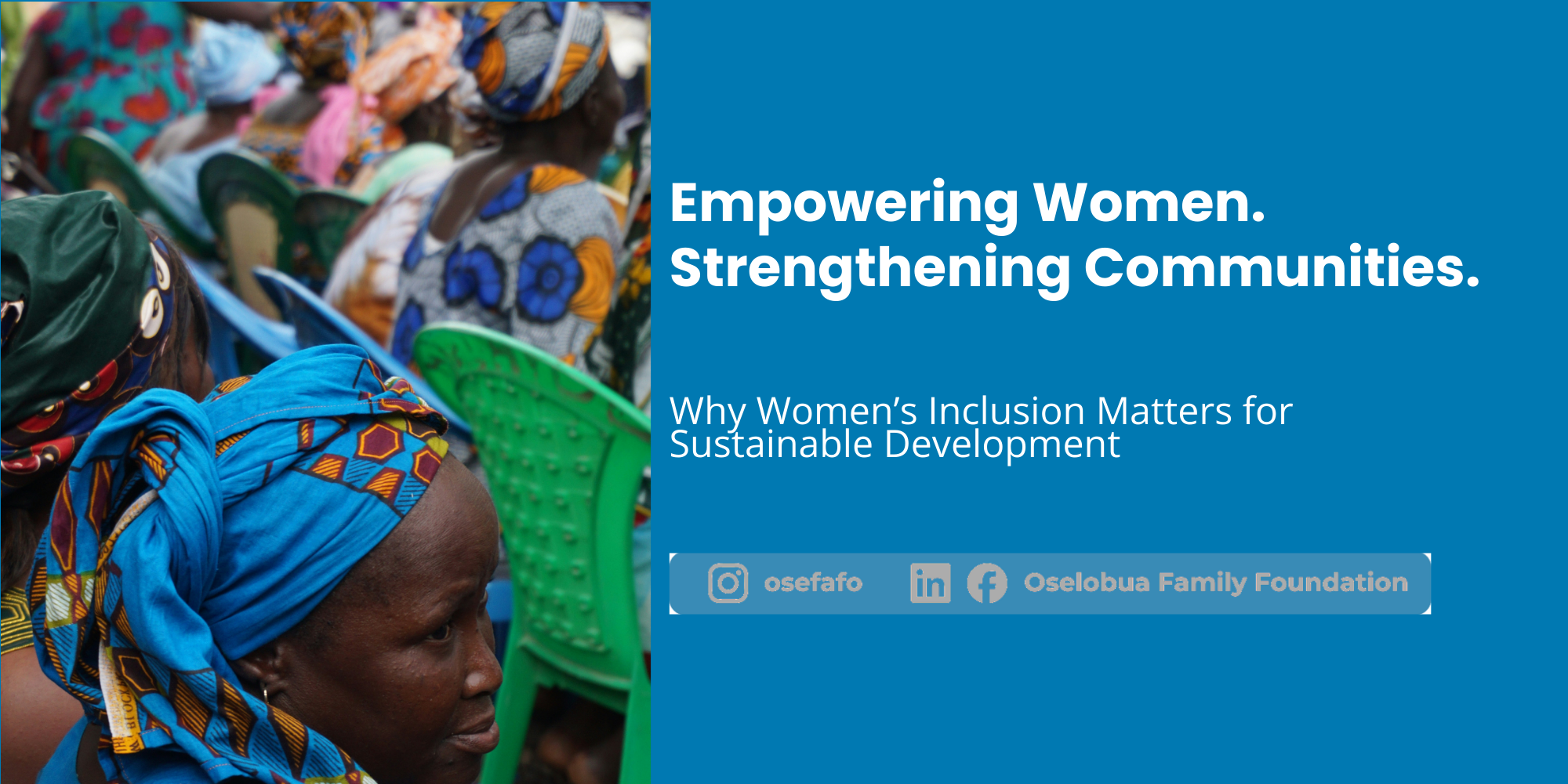
Community development is often discussed in terms of infrastructure, education, and economic growth. Yet, one of the most powerful drivers of lasting change is sometimes overlooked: the inclusion of women. Across communities, women play central roles in families, schools, local economies, and social networks. When women are excluded from decision-making or denied access to opportunities, community progress slows. When they are included, development becomes more sustainable, inclusive, and impactful.
At its core, community development is about improving quality of life. This cannot be achieved without recognising the lived realities of women and ensuring they are part of the solutions designed to address social and economic challenges.
Women are often the first educators in a child’s life. They are caregivers, mentors, and role models within households and communities. When women have access to education, healthcare, and economic opportunities, the benefits extend far beyond the individual. Families are healthier, children are more likely to stay in school, and communities are better equipped to break cycles of poverty.
Despite this, many women still face barriers that limit their participation in community life. These barriers may include limited access to education, cultural norms that restrict leadership roles, economic exclusion, and a lack of representation in decision-making spaces. Over time, these gaps create uneven development, where progress benefits only a portion of the population.
From an organisational perspective, inclusive development means intentionally designing programs that recognise and address these gaps. It means listening to women’s voices, understanding their challenges, and involving them in shaping solutions that affect their lives. Community programs are more effective when women are not only beneficiaries but also active contributors and leaders.
Evidence from grassroots initiatives consistently shows that when women are empowered, communities experience stronger social cohesion. Women-led initiatives often prioritise education, health, and community well-being. These priorities are not accidental; they reflect lived experience and a deep understanding of community needs.
Economic inclusion is another critical factor. When women are supported with skills training, access to resources, and opportunities to earn a livelihood, household incomes improve, and local economies grow. Financial independence also strengthens women’s ability to advocate for themselves and their families, reinforcing long-term resilience.
At Oselobua Family Foundation, we view women’s inclusion as a foundation for sustainable community development. Our work recognises that empowering women is not separate from empowering children and youth; it is deeply connected. When women are supported, they are better positioned to support the next generation.
True development cannot be achieved through isolated efforts. It requires collective responsibility, inclusive planning, and intentional action. Women must be present at the table, not as an afterthought, but as partners in progress.
As communities, organisations, and institutions continue to work toward sustainable development goals, prioritising women’s inclusion is not just a moral imperative; it is a practical one. Communities thrive when everyone has the opportunity to contribute, and women’s leadership remains essential to building a more equitable and resilient future